
Building an education platform for startup founders at BlueChilli — writing the curriculum and engineering the platform simultaneously.
Building an education platform for startup founders — from curriculum to code
At BlueChilli, we ran startup accelerator cohorts out of Sydney. We'd take founders from an idea on a napkin to their first paying customer: problem validation, product strategy, MVP, launch. The educational side of that process — teaching non-technical founders how to think about technology, how to work with developers, how to test products with real users — was all delivered in person.
The problem was that in-person sessions were doing two jobs at once. We were spending time explaining what front-end and back-end mean in the same room where we should have been helping a founder decide whether their specific product needed a native mobile app or whether a responsive web app would test the hypothesis faster. The high-level concepts were crowding out the specific, hard conversations that actually moved startups forward.
There was a second problem too. Founders who applied to BlueChilli but didn't make it into a cohort walked away with nothing. No access to the curriculum, no materials, no way to learn what we were teaching. That felt like a missed opportunity.
Two jobs as one project
StartupU was the solution: a web-based course platform for startup founders. Written lessons, video content, quizzes, progress tracking, and gamification — badges and completion milestones to keep people moving through the material.
My involvement split into two distinct roles that rarely exist in the same person on the same project.
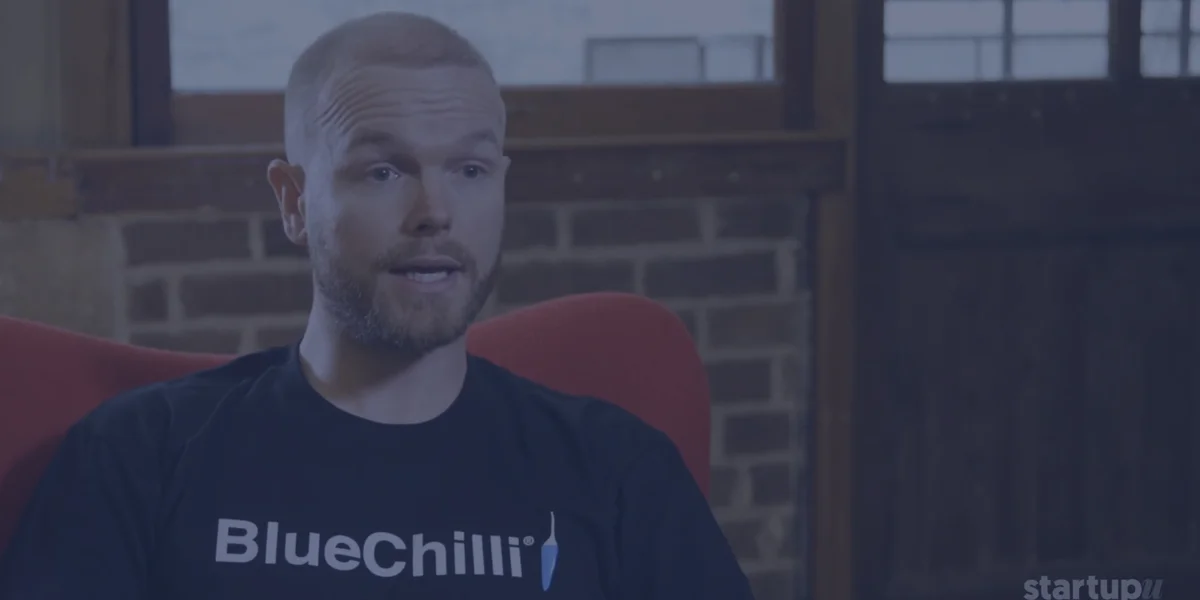
The first was content. I wrote the curriculum from a product and engineering perspective. Topics ranged from understanding how different technologies fit together — why the distinction between front-end and back-end matters when you're describing your product to investors — to building effective testing and feedback loops with a development team. I was on camera for the video lessons too, which was new for me. There is something clarifying about having to explain a complex technical concept to a non-technical audience while a camera is recording. You find out very quickly where your understanding is solid and where you've been hiding behind jargon.
The second role was engineering. I led development on the platform itself — managing the back-end team while writing the front-end code. The build ran for several months alongside the filming schedule, which created its own logistical puzzle. We were writing content for a platform that was still being built, and building a platform for content that was still being filmed.
What changed in the room
The platform rolled out to hundreds of BlueChilli founders across multiple cohorts. Several hundred more external founders — people who hadn't been accepted into the accelerator but still wanted to learn — got access too.
The shift wasn't dramatic in the way a revenue chart spikes. It was quieter than that. In-person sessions got better. Founders arrived already understanding how their technology stack fit together. They knew the difference between a data problem and a user experience problem. That meant we could skip the fundamentals and spend session time on the specific decisions their startups were facing. The quality of the education improved because we stopped repeating the basics to a room of mixed experience levels.
StartupU outlived BlueChilli. When the company eventually closed its doors, the platform and the content I'd created continued running for several more years.
What I took from it
Building the content and building the platform at the same time gave me a perspective I still use. When you understand the product from both the creator's seat and the engineer's seat, you make different decisions about both. You write content that fits the platform's constraints. You build features that serve the content's goals. That feedback loop — between what you're teaching and how you're delivering it — is something I look for in every project now.
The other lesson was simpler. Getting in front of a camera for the first time was uncomfortable in a way that writing code never is. But explaining complex ideas to non-technical people, clearly and on the spot, turned out to be one of the more transferable skills I picked up at BlueChilli. I use it more often than most of the technical ones.