

Building an online store for Sony Music that solved a security problem by not being a store at all.


The Problem
Legacy Recordings is Sony Music's catalog division. They manage the back catalogs of artists like Miles Davis, Johnny Cash, Bob Dylan, and hundreds of other legendary musicians. As one of the biggest recording labels in the world, Sony Music also had a target on their back. The company had been hit by high-profile security breaches, and processing customer payment data directly through their own web properties carried real risk.
Legacy Recordings needed an online store. But the brief was unusual: build a store that has never been built before. One that could sell physical and digital music without the security liability of handling payment processing in-house.
A Store That Isn't a Store
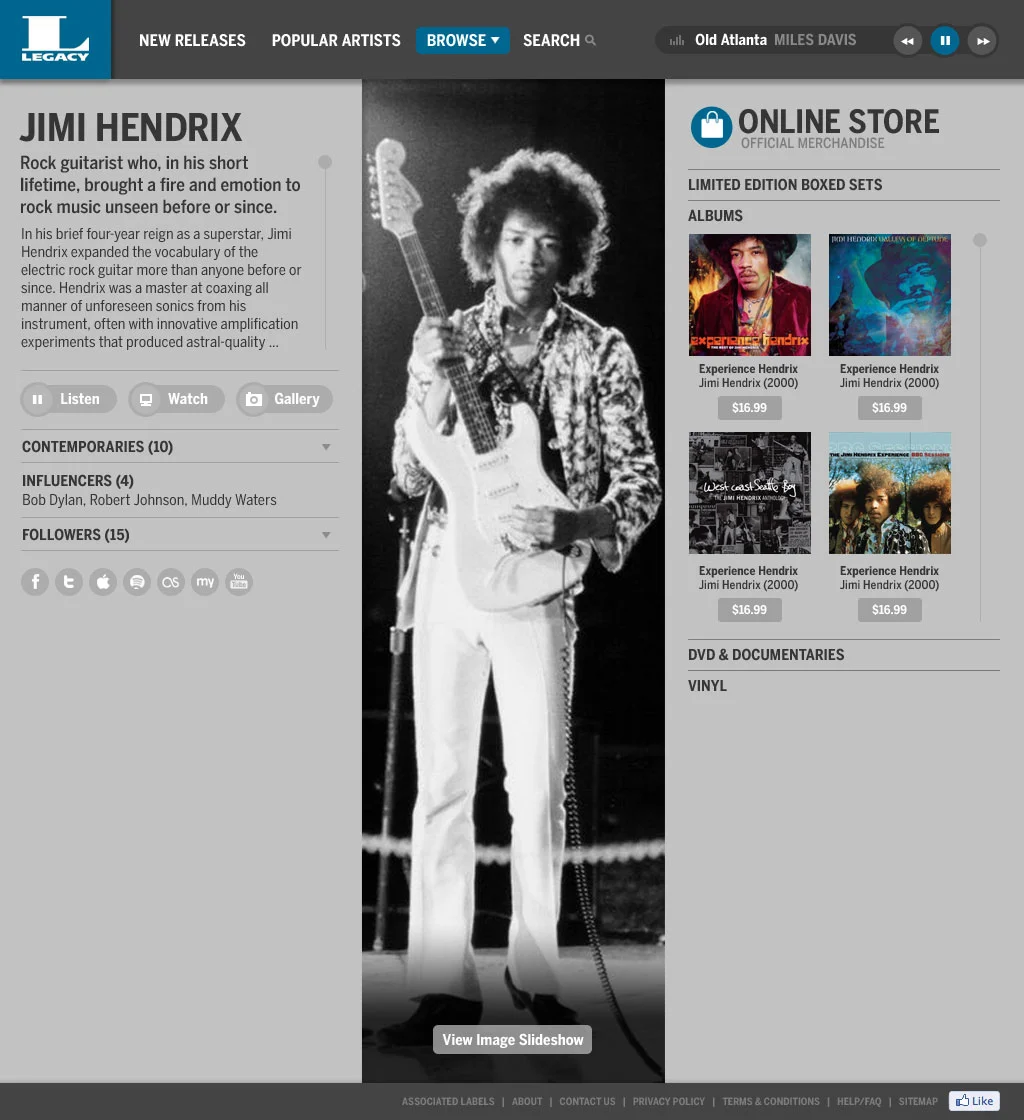
Working as part of the We Are Hunted team, I came up with an approach that sidestepped the problem entirely. Instead of building a traditional e-commerce platform that would need to handle customer payment data, we built a storefront that curated product listings from Amazon's marketplace. Users could browse the Legacy Recordings catalog, read about albums and artists, and when they were ready to buy, the purchase was completed through Amazon's payment system.
The site looked and felt like a store. It had product pages, browsing, search, and editorial content about the artists and their recordings. But it never touched a credit card number. All payment processing happened on Amazon's infrastructure, which meant Sony didn't need to worry about PCI compliance or payment data security for this property. The store wasn't really a store. It was a curated catalog with a buy button that handed off to someone else.
The Build
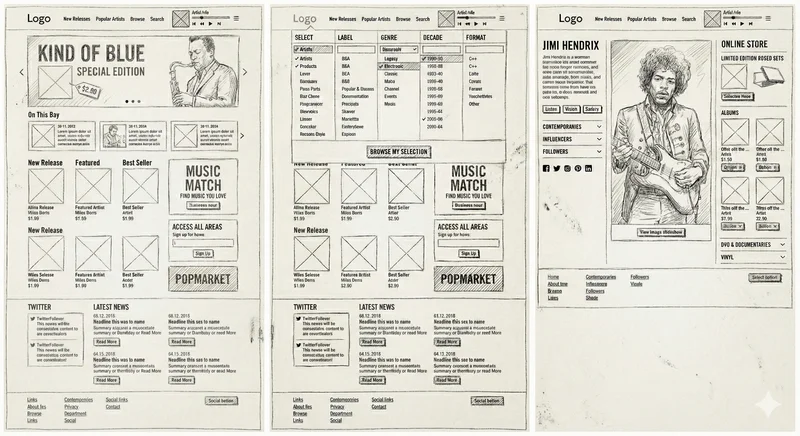
This was 2012, and responsive web design was just emerging. We built the Legacy Recordings site as a fully responsive experience at a time when most e-commerce sites were still serving separate mobile versions or ignoring mobile entirely. The design treated animation as a first-class concern. Page transitions, hover states, and content reveals all had considered motion design, which was unusual for an e-commerce site at the time.
The Amazon integration had its own challenges. Product data needed to stay synchronised with Amazon's catalog, pricing had to be current, and availability had to be accurate. A customer finding an album on the Legacy Recordings site only to discover it was out of stock when they hit Amazon would have been a poor experience. Getting that data pipeline reliable was a significant part of the technical work.
What Happened Next
The project was warmly received by Sony's chairman. The approach of curating content from an existing marketplace rather than building a full e-commerce stack solved a real problem: it let a major label sell music online without the security exposure of processing payments. Sony adopted the same pattern across several other sales websites outside of Legacy Recordings.
Looking back, the idea of a storefront that doesn't process payments is commonplace now. Affiliate commerce, marketplace integrations, and payment hand-offs are standard e-commerce patterns. In 2012, it felt like a creative workaround for a security problem. It turned out to be a preview of how a lot of online retail would eventually work.